Understanding Attachment Styles: Why He Pulls Away

Reading time: 10 minutes
You have met three times, the conversations were easy, the touches tender – and suddenly he stops getting in touch. Or he only answers briefly, needs "time for himself," seems dismissive. What happened? The answer often lies not in you but in deeply rooted attachment patterns that we all carry with us. Understanding attachment styles after 60 means no longer guessing, but reading the other person's emotional map – and your own at the same time.
After a divorce, the loss of a partner or years on our own, many of us have developed a very particular way of behaving in relationships. Some seek closeness, others need space. And often these needs collide without our understanding why. In this article I will show you how to recognize different attachment styles, why he withdraws emotionally, and how to learn to deal with distance in relationships – without losing yourself.
What Are Attachment Styles and Why Do They Still Shape Us Today?
Attachment styles develop in early childhood, through the way we experienced closeness, safety and reliability. The attachment theory of psychologist John Bowlby distinguishes three main types: secure, anxious and avoidant. According to a 2023 study by the University of Zurich in Switzerland, about 56 percent of adults in Europe have a secure attachment style, while 24 percent are anxiously attached and 20 percent avoidantly attached.
These patterns stay with us for life. Even at 60, 65 or 70, we often react in new relationships the way we learned early on. A man who pulls away often does so not out of disinterest, but because emotional closeness triggers a fear of losing control or becoming dependent. A woman who constantly seeks reassurance may have learned early that love came with conditions.
The good news: attachment styles are not set in stone. With awareness, communication and sometimes professional support, we can change them. A 2022 study by the Max Planck Institute for Human Development in Berlin, Germany, showed that people over 50 develop greater emotional maturity and can reflect on their relationship patterns more deliberately than in their younger years.
The Four Attachment Styles: How to Recognize Yourself and the Other Person
Secure Attachment Style: The Foundation for Balance
People with a secure attachment style feel comfortable with closeness but can also be alone. They communicate their needs clearly, without clinging or withdrawing. If you have this style yourself, you probably experience little drama in relationships – but perhaps also bewilderment when the other person suddenly reacts with distance.
An example: you text him an invitation to a concert at Chicago's Symphony Center. He replies only after three days, tersely, with "Sounds nice, but I have to see." A securely attached person would follow up without making accusations. An anxiously attached person would immediately feel rejected.
Anxious Attachment Style: The Longing for Reassurance
Someone who is anxiously attached longs for deep emotional closeness but at the same time fears being abandoned. Typical thoughts: "Does he really like me?" or "Why isn't he calling?" These people interpret every delay as a sign of disinterest. According to a 2023 survey by the German market research institute GfK, 38 percent of singles over 60 in Germany feel insecure in new relationships – often a sign of anxious attachment behavior.
If you recognize yourself here: you are not "too much" or "too needy." But it is worth clarifying your expectations and not making how you feel depend solely on the other person's behavior. Working on your self-worth can be an important building block for breaking out of the pattern.
Avoidant Attachment Style: Distance as Protection
People with an avoidant attachment style value their independence above all else. Emotional closeness quickly feels suffocating. They often seem cool and rational, and withdraw when things get intimate. An avoidantly attached man may not get in touch for days after an intense weekend – not out of malice, but because he needs distance to feel safe again.
Important: avoidant partners are not incapable of relationships. But they need space and clear, calm communication. Pressure only creates more withdrawal. If you are with someone like this, it helps to cultivate your own interests and not constantly demand reassurance. Mindfulness and your own balance are your best allies here.
Disorganized Attachment Style: Between Longing and Fear
Rare but challenging: the disorganized attachment style is a mix of anxious and avoidant. Those affected long for closeness but are also deeply afraid of it. They send mixed signals, withdraw and then seek contact again shortly after. This style often develops through traumatic experiences in childhood or earlier relationships.
If you notice this kind of behavior in someone, professional support is usually advisable. As a partner you can offer support, but you cannot heal.
Why Does He Withdraw Emotionally? The Most Common Reasons After 60
Emotional withdrawal often has little to do with you – and everything to do with his attachment style. Here are the four most common causes:
- He feels overwhelmed by the intensity of the feelings and needs time to process them.
- He fears being hurt or becoming dependent because earlier relationships ended painfully.
- He interprets your closeness as a demand for commitment that he is not ready to make yet.
- He has an avoidant attachment style and automatically reacts with distance as soon as intimacy grows.
A 2022 study by the German Psychological Society showed that men over 60 are more likely than women to lean toward avoidant attachment patterns – especially after long marriages or the death of their partner. The fear of being vulnerable again is real and understandable.
That does not mean you have to accept his behavior. But it helps not to take it personally. Ask yourself: is his withdrawal a sign that he is fundamentally unavailable? Or does he just need more time and space than you are used to?
How Do I Deal With Distance in a Relationship? Practical Strategies
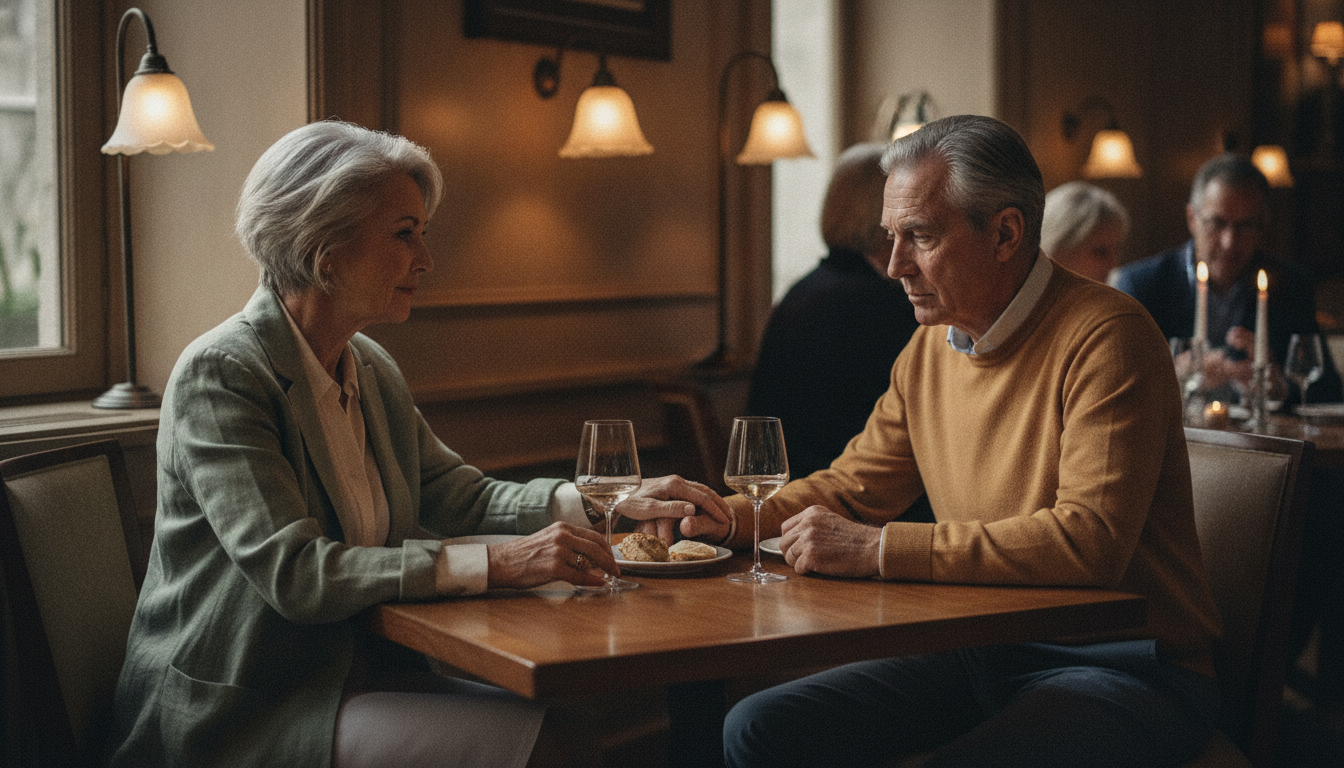
Enduring distance is an art – especially when we long for closeness. Here are four tried-and-true strategies that I have experienced myself and learned from others:
1. Name the pattern without accusing. Say: "I notice that after we meet, you often don't get in touch for a while. Do you need more space?" This question opens a conversation instead of placing blame. Avoid phrases like "You're ignoring me" or "I guess you don't care about me."
2. Clarify your own expectations. How much contact do you need to feel secure? A message once a day? One call a week? Meeting twice a month? Be honest with yourself – and share these needs. Dinner together at a quiet neighborhood restaurant in Chicago's Lincoln Park can be a good setting for such a conversation: neutral, relaxed, without pressure.
3. Create your own anchors. Do not wait for him to get in touch. Fill your time with people and activities that are good for you. Shared experiences like a wine tasting can create closeness, but you should also be able to be content on your own. A stable sense of self-worth never depends on a single person.
4. Set boundaries. If his withdrawal becomes the norm and you feel constantly insecure, that is not a healthy basis. A relationship should nourish, not constantly unsettle. Say clearly what does not work for you – and act on it. Sometimes letting go is the healthiest form of self-care.
Understanding Different Attachment Styles in Relationships: Who Fits With Whom?
The combination of a secure style with an anxious or avoidant one can work – if both are willing to work on their communication. It gets difficult when anxious meets avoidant: one clings, the other withdraws, and both feel misunderstood.
According to a 2023 European study by the University of Vienna in Austria, partnerships between people with a secure attachment style are the most stable – with a breakup rate of only 18 percent after five years. Combinations of anxious and avoidant, by contrast, show a rate of 47 percent.
That does not mean such relationships have to fail. But they require more patience, more reflection and often the courage to seek professional support. Couples therapy is not a sign of weakness but of responsibility.
Recognizing Emotional Availability in Later Life: The Signs That Matter
How do you tell whether someone is truly emotionally available – or only half-heartedly involved? Watch for these signals:
He talks openly about his feelings, even when it is uncomfortable. He asks questions about your past, your wishes, your fears. He keeps agreements and gets in touch when he has promised to. He shows interest in shared plans, not just the next meeting. He makes you feel seen – not just desired.
If these points are missing, caution is advised. Emotional availability does not mean perfection, but willingness: the willingness to show yourself, to be vulnerable, to admit uncertainty now and then.
A man who says after the third date, "I like you, but I need time" – that is honest. A man who says "I like you" but never has time – that is an evasive maneuver.
Communication in a Relationship: How to Talk About Closeness and Distance

The best strategy for dealing with different attachment styles is clear, appreciative communication. Do not complain, do not accuse, but name and ask.
Instead of "You never get in touch!" say: "I've noticed we need different amounts of contact. Can we talk about what works for both of us?" Instead of "You're so distant!" say: "I feel insecure when I don't hear from you for a long time. What do you need to feel comfortable?"
Conversations like these are not easy. But they are the only way to a relationship in which both people feel seen. According to a 2023 survey by the Institut für Demoskopie Allensbach in Germany, only 34 percent of couples over 60 said they regularly talk about emotional needs. Yet that is exactly the key to lasting satisfaction.
Frequently Asked Questions About Attachment Styles After 60
Why does he withdraw emotionally even though he shows interest?
Emotional withdrawal despite interest is typical of avoidant attachment styles. He likes you, but closeness triggers a fear of losing control or becoming dependent. That is not a conscious process but a learned protective pattern. Feel free to bring it up and give him time, without losing yourself.
Can attachment styles still be changed later in life?
Yes, absolutely. Attachment styles are not static. With self-reflection, conscious work on yourself and sometimes therapeutic support, people can change their relationship patterns even at 60 or 70. What matters is the willingness to look closely and to practice new behaviors.
How can I tell whether someone has a secure attachment style?
Secure people communicate openly, keep agreements, show interest in you and can enjoy both closeness and time alone. They respond to conflict not with withdrawal or drama but with a willingness to talk. They make you feel welcome – without taking over.
What should I do if my attachment style is anxious and his is avoidant?
This combination is challenging but not impossible. Above all it needs one thing: conscious communication. You have to learn not to read every bit of distance as rejection. He has to learn that closeness is not a threat. Couples therapy or coaching can be very helpful here. Set realistic goals and give each other time.
How do I deal with distance in a relationship without giving myself up?
Accept that different needs for closeness are normal. But also set boundaries: how much distance can you tolerate without being permanently unhappy? Communicate your needs clearly and create your own sources of fulfillment. A healthy relationship should complement your life, not have to fill it completely.
Conclusion: Understanding Attachment Styles After 60 Means Knowing Yourself and Others Better
Attachment styles explain a lot – but they do not excuse everything. When you understand why he pulls away or why you yourself become insecure so quickly, you gain clarity. And clarity is the first step toward a conscious decision: can I have a relationship with this person in which we will both be happy? Or are our needs too different?
There is no perfect combination. But there are honest conversations, mutual respect and the willingness to work on yourself. If you notice that the other person is emotionally unavailable and unwilling to open up, that is information. Not a defeat, but an invitation to move on – toward someone who can meet you as an equal.
At 60, 65 or 70, you have a right to a relationship that nourishes, not unsettles. One in which you can show yourself as you are – and so can the other person. Take the time to understand attachment styles. It is worth it.