Mentoring After 60: How Career Networks Become Connections

Reading time: 9 minutes
When I attended my first mentoring event at the Hotel Adlon in Berlin-Mitte at the age of 62, I was thinking of professional exchange. What I didn't expect was that this evening would also change my understanding of closeness and connection. My mentor, a 58-year-old management consultant, not only opened professional doors for me but showed me how enriching it is when intellectual depth meets human warmth. Mentoring after 60 means far more than career development - it creates connections that can be romantically inspiring, too.
At a stage of life when many are planning their retreat from work, I discovered a new kind of vitality through targeted networking for seniors. Professional development at 60+ is not a contradiction but a chance to meet people who share similar ambitions and are at the same time open to personal closeness.
Why professional mentoring after 60 is more than career planning
According to a 2023 study by Germany's Federal Ministry of Education and Research, 37 percent of people over 60 take part in professional continuing education programs, and the trend is rising. The numbers show that having a career later in life is no longer a fringe phenomenon. But the real surprise lies in the connections that come out of it. A mentoring program like the "Senior Expert Service" run by the German Economic Foundation (Stiftung der Deutschen Wirtschaft) not only conveys expertise but also makes deep personal contacts possible.
At my first meeting with my mentor at the Café Einstein Stammhaus on Kurfürstenstrasse in Berlin, I felt it right away: this was about more than Excel spreadsheets and strategy papers. We talked about life plans, about dreams we still want to realize, about the balance between work and enjoying life. This kind of depth rarely emerges on a first dinner date, but in a professional context built on mutual respect and shared goals, people open up differently.
How I met interesting people through professional involvement
Networking for seniors works differently today than it did 20 years ago. Platforms like LinkedIn recorded more than 3.2 million German-speaking users over 60 in 2024 - an increase of 28 percent compared with 2022, as LinkedIn announced in a press release in March 2024. But digital networking alone isn't enough. Real connections through work happen at in-person events, industry conferences or targeted mentoring meetups.
I signed up for the "Initiative Wirtschaftsforum 60plus," an association of experienced specialists and executives based in Frankfurt am Main, Germany. At a networking event at the Frankfurter Hof, I met not only potential business partners but also people looking for meaningful connections - professionally and personally. One participant, a former marketing director from Hamburg, told me how she had met her current life partner through a similar program. Both shared a passion for sustainable business consulting and realized while working on projects together that there was more between them than collegiality.
Concrete ways to build mentoring relationships
If you want to build mentoring relationships in retirement age, you should proceed in a structured way. It takes courage to reposition yourself once more at 60 or 65, but the investment pays off. Here are the concrete steps that worked for me:
- Sign up for established mentoring programs such as "Perspektive Wiedereinstieg" run by the German Federal Employment Agency or the "Senior Experten Service" (both with free introductory consultations)
- Attend industry meetups and professional conferences - in 2023 I went to "Zukunft Personal" in Cologne and made 4 valuable contacts there
- Maintain an active presence on LinkedIn with regular posts on professional topics - my profile now reaches over 500 connections, including 12 potential mentors
- Be open to two-way mentoring, where both sides learn from each other - this equal footing creates a special kind of closeness
Why professional ambition at 60 can be romantically enriching
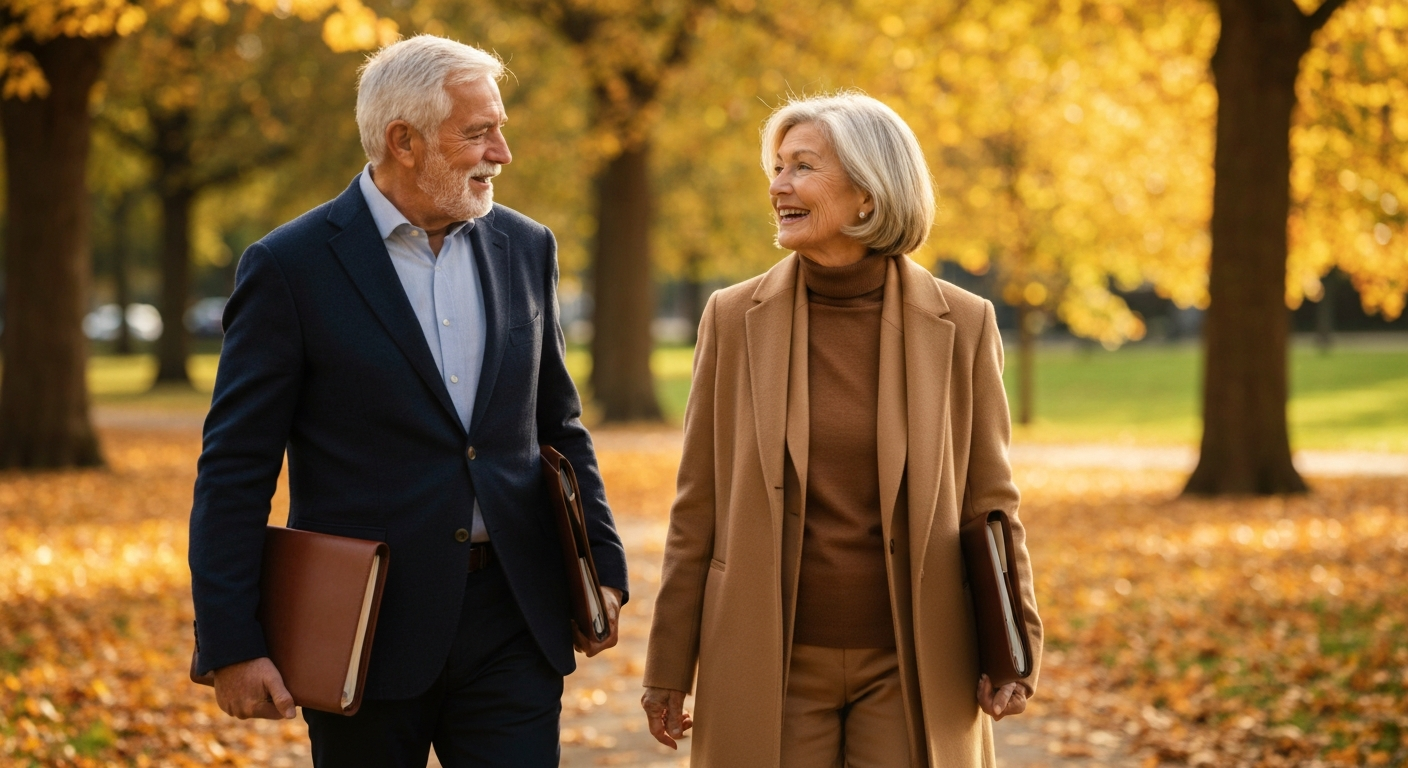
It sounds paradoxical at first: staying active in your working life makes you more attractive to potential partners. But that is exactly what I experienced. My professional ambitions at 60 signaled vitality, curiosity and a desire to shape things - qualities that are also crucial in a new relationship at 60. People who keep developing professionally radiate an energy that is attractive.
My mentor never became my romantic partner, but the way we communicated, the way we developed ideas together and challenged each other, taught me a great deal about the quality of relationships. I learned that intellectual stimulation and emotional connection are not opposites but complement each other beautifully. This insight later helped me, when looking for a partner later in life, to articulate more clearly what I was after: someone who speaks to both the mind and the heart.
The role of lifestyle dating platforms
Interestingly, professional and romantic networks increasingly overlap. Platforms like MySugardaddy have recognized that many of their users are looking not only for classic partnerships but for connections that engage several levels - intellectual, cultural, professional. The concept of lifestyle dating, where shared interests and lifestyles take center stage, fits perfectly with what I experienced in professional networking: connections form where genuinely shared values are lived.
An acquaintance from my mentoring circle uses MySugardaddy specifically to meet men who, like her, are still professionally active and value stimulating conversation. She told me about a first meeting at the Berlin Philharmonie, where they first talked about a business project and then realized how much more they had in common. This mix of professional respect and personal attraction, she said, was exactly what she had been looking for.
Mentoring as a door-opener to community and closeness
The biggest insight from my mentoring experience: when you network professionally, you automatically widen your social circle. According to a 2023 survey by the Bertelsmann Foundation, 62 percent of people over 60 say that professional contacts are among their most important social relationships - more than club memberships or neighborhood ties. Mentoring works as a door-opener to community and closeness because it is based on mutual benefit, not on chance or superficial sympathy.
At a mentoring workshop at the Gürzenich in Cologne, I met a retired architect who had become completely isolated after his wife died. Through the program he found not only new professional projects but also a community of people going through similar transitions. Today he leads a mentoring group for widowed professionals over 60 himself. His story shows that professional engagement creates structure, purpose and social connection points - all prerequisites for becoming open to romance again, too.
How career networks lead to personal connections
The move from professional to personal contact takes tact, but it is possible and often more natural than you'd think. At a professional congress in Munich-Schwabing, I sat next to an IT consultant, and at first we talked about digitalization in mid-sized businesses. After the event we went for a coffee on Leopoldstrasse, and the conversation changed. We talked about travel, about music, about loneliness and longing. That contact didn't turn into a relationship, but it did become a friendship that showed me: how career networks lead to personal connections depends on our willingness to look behind the professional facade.
It's important to stay authentic. Networking doesn't work as disguised partner hunting. But when we show up as whole people, with our professional goals and personal dreams, connections form that enrich both. One practical tip: after professional meetings, offer a short personal conversation - "Would you like to take a walk along the Rhine?" worked for me several times in Cologne and led to deeper connections than any extra hour in the conference room could have.
Practical tips for professional mentoring with personal added value
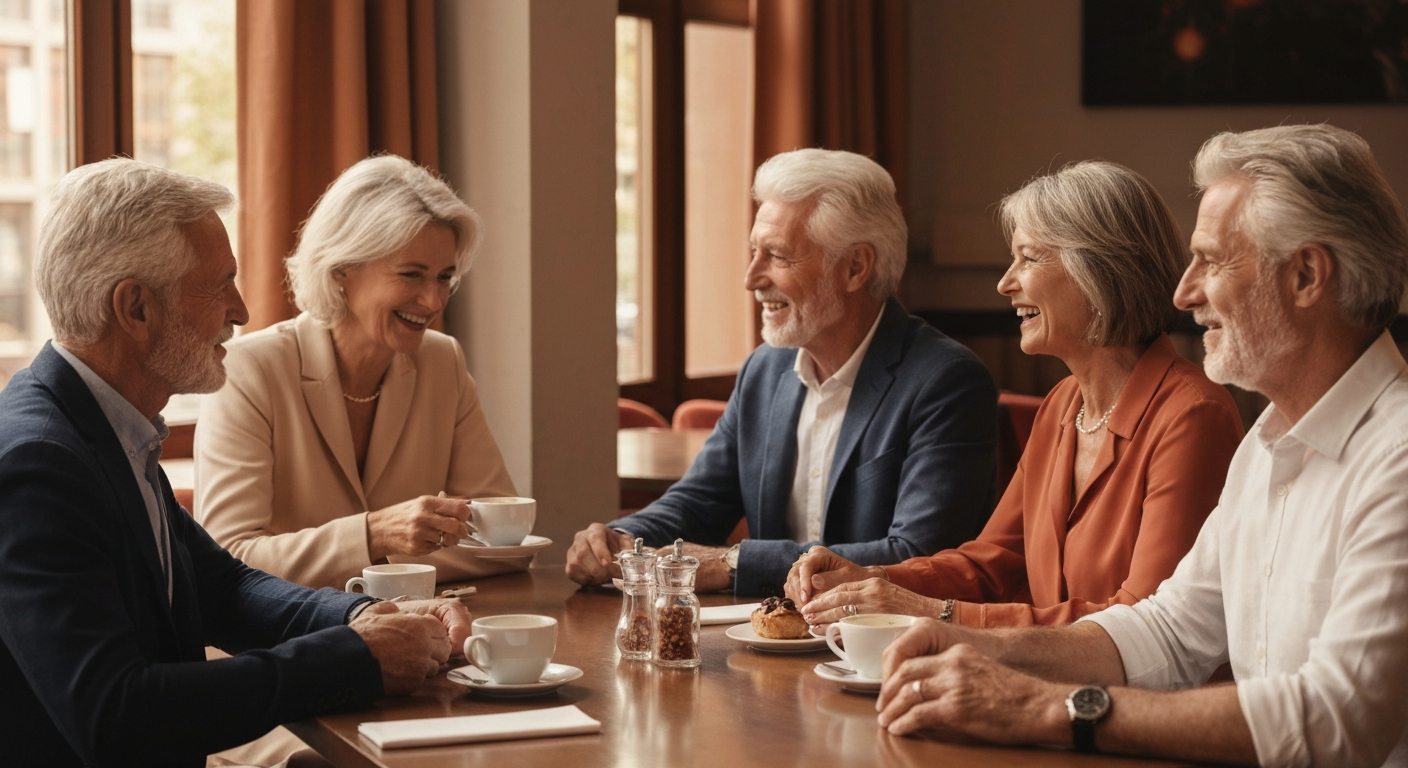
If you want to combine professional development at 60+ with the hope of enriching encounters, there are a few practical points to keep in mind. First: choose mentoring programs that value personal exchange, not just digital webinars. The "Akademie 2. Lebenshälfte" in Bonn, for example, offers two-day workshops with a maximum of 12 participants - ideal conditions for real connections.
Second: be open to different formats. Reverse mentoring, where younger people support older ones with digital topics, creates surprising perspectives and shows that learning is not a one-way street. From a 35-year-old marketing expert I learned not only Instagram strategies but also a fresh outlook on relationships and life planning.
Third: use mentoring as an opportunity to strengthen your own attractiveness. People who keep developing professionally come across as more vital, more confident and more interesting - to potential partners as well. The travel etiquette with a new companion often begins with becoming a person you yourself would like to travel with.
Frequently asked questions about mentoring after 60
Does mentoring after 60 still make sense if I no longer work full time?
Yes, absolutely. Mentoring after 60 isn't tied to full-time work. Many programs are aimed explicitly at part-time employees, the self-employed or people in transition. The value lies in the exchange and the connections, not in working hours. Those with more time in particular can use mentoring more intensively and nurture the resulting relationships more deliberately.
How do I find a suitable mentoring program?
Start with established organizations such as the Senior Experten Service, the Initiative Wirtschaftsforum 60plus or regional chamber of commerce programs. The German Federal Employment Agency offers an overview of free programs at www.perspektive-wiedereinstieg.de. Look for programs that allow in-person meetings, not just online sessions. In cities like Hamburg, Berlin or Frankfurt there are also local networks specifically for working professionals 60+.
Can a romantic relationship really come out of professional mentoring?
Directly, that's rarely the goal, but indirectly it happens more often than you'd think. Mentoring creates a foundation of mutual respect, shared values and intellectual exchange - ideal conditions for deeper connections. Even if the mentoring itself doesn't lead to a relationship, it widens your circle to include people who think and live in similar ways. Unexpected encounters often arise from this expanded network.
What costs are involved in mentoring programs?
That varies widely. Many publicly funded programs, such as those from the German Federal Employment Agency or the Senior Experten Service, are free. Private providers charge between $225 and $900 for three-month programs. Important: free programs aren't worse, and are often even better structured. Check beforehand whether in-person meetings are included - they are crucial for the personal added value.
How much time should I set aside for mentoring?
Plan on at least 4 to 6 hours a month - 2 hours for direct mentoring conversations, the rest for networking events, preparation and follow-up. The time investment pays off many times over, though, because the contacts you make often enrich your private life, too. Many mentoring relationships develop into friendships that last well beyond the program.
Conclusion: mentoring as a life enricher on several levels
My experience with mentoring after 60 taught me that professional ambition and personal fulfillment don't rule each other out - they reinforce each other. Those who actively use career networks in the second half of life open new doors not only professionally but also personally. The connections that form this way often carry further than any dating app could - because they are based on real exchange, mutual respect and shared goals.
If you're thinking about reorienting professionally or simply want to meet interesting people: mentoring is a wonderful way. It gives you structure, purpose and social connection points. And who knows - perhaps along the way you'll meet not only professional inspiration but also someone who touches your heart. Life often surprises us where we least expect it. Use the opportunities that networking for seniors offers today, and stay open to everything that may come of it.